Steel Che’s Machine Aesthetic
Exhibition: Jan 8th - Feb 3rd, 2026
Opening Reception: January 8 (4:00-7:00pm)
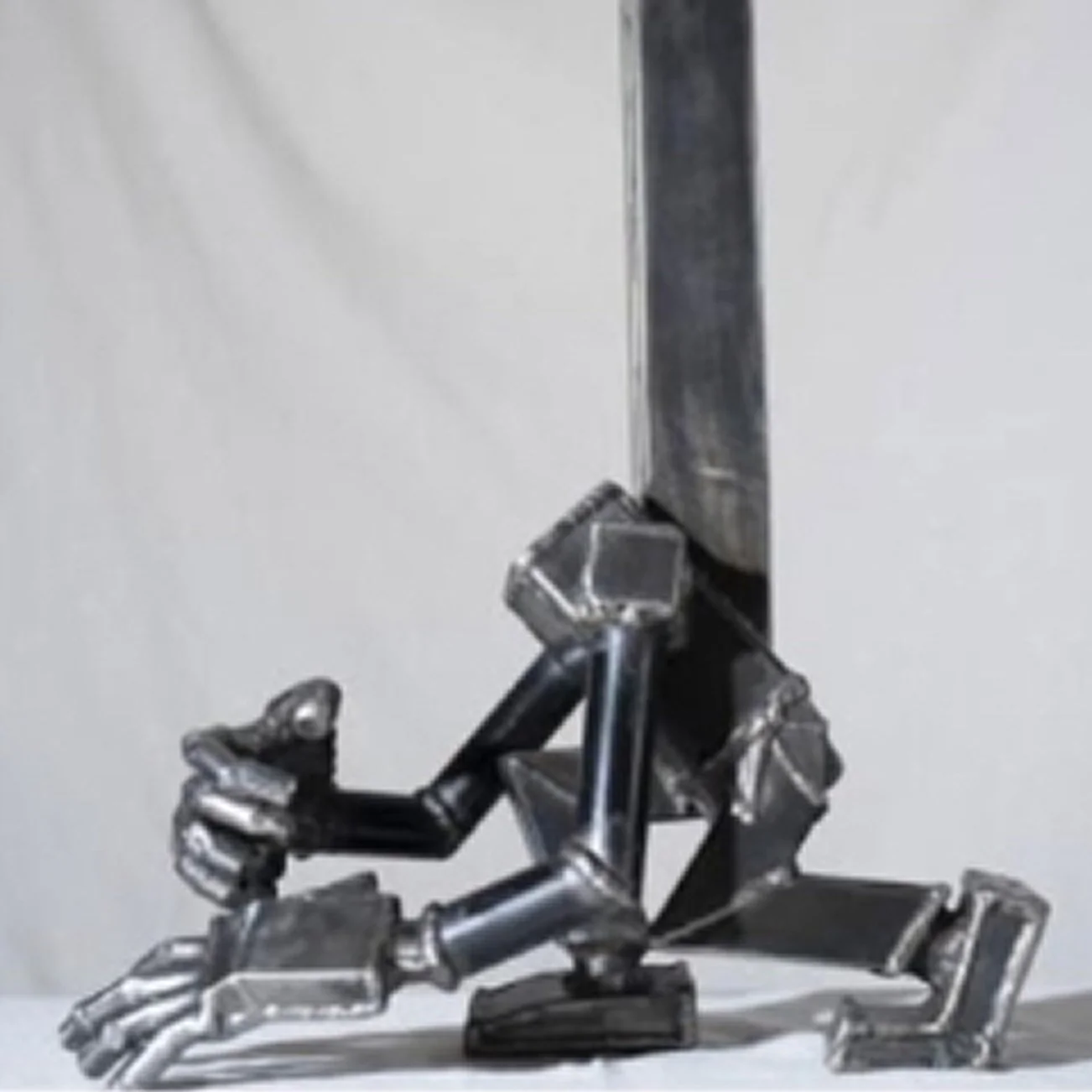
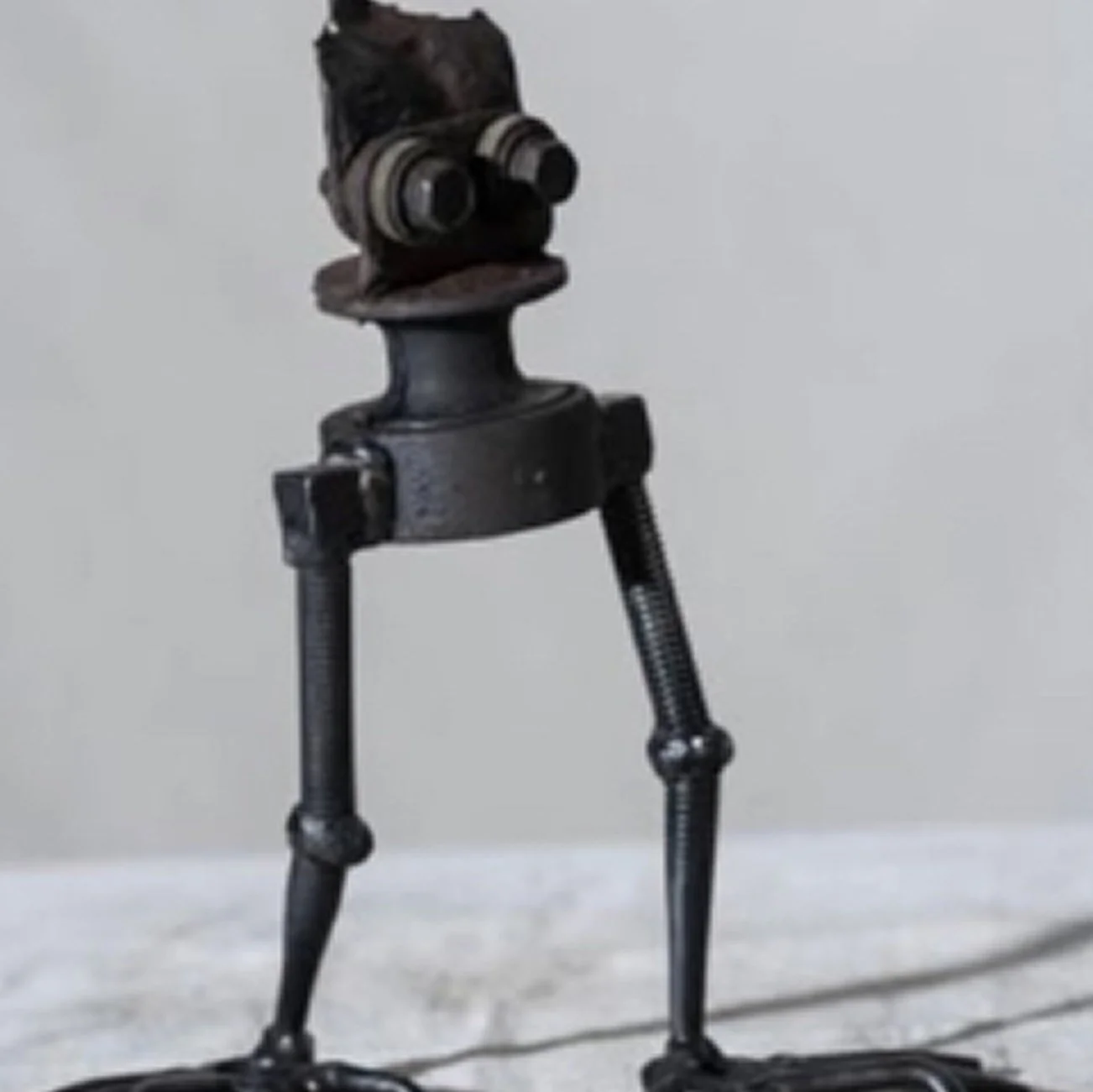
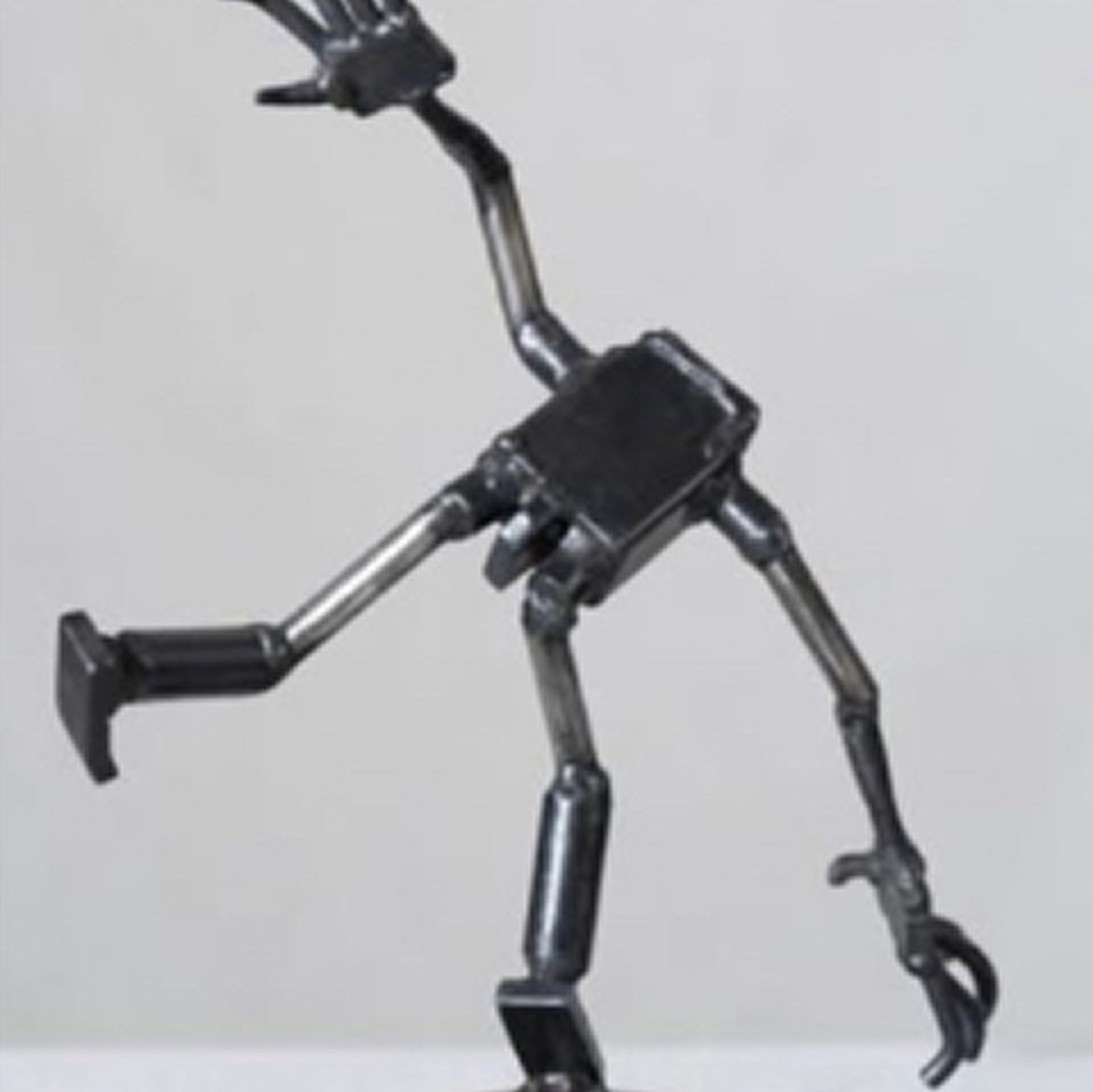
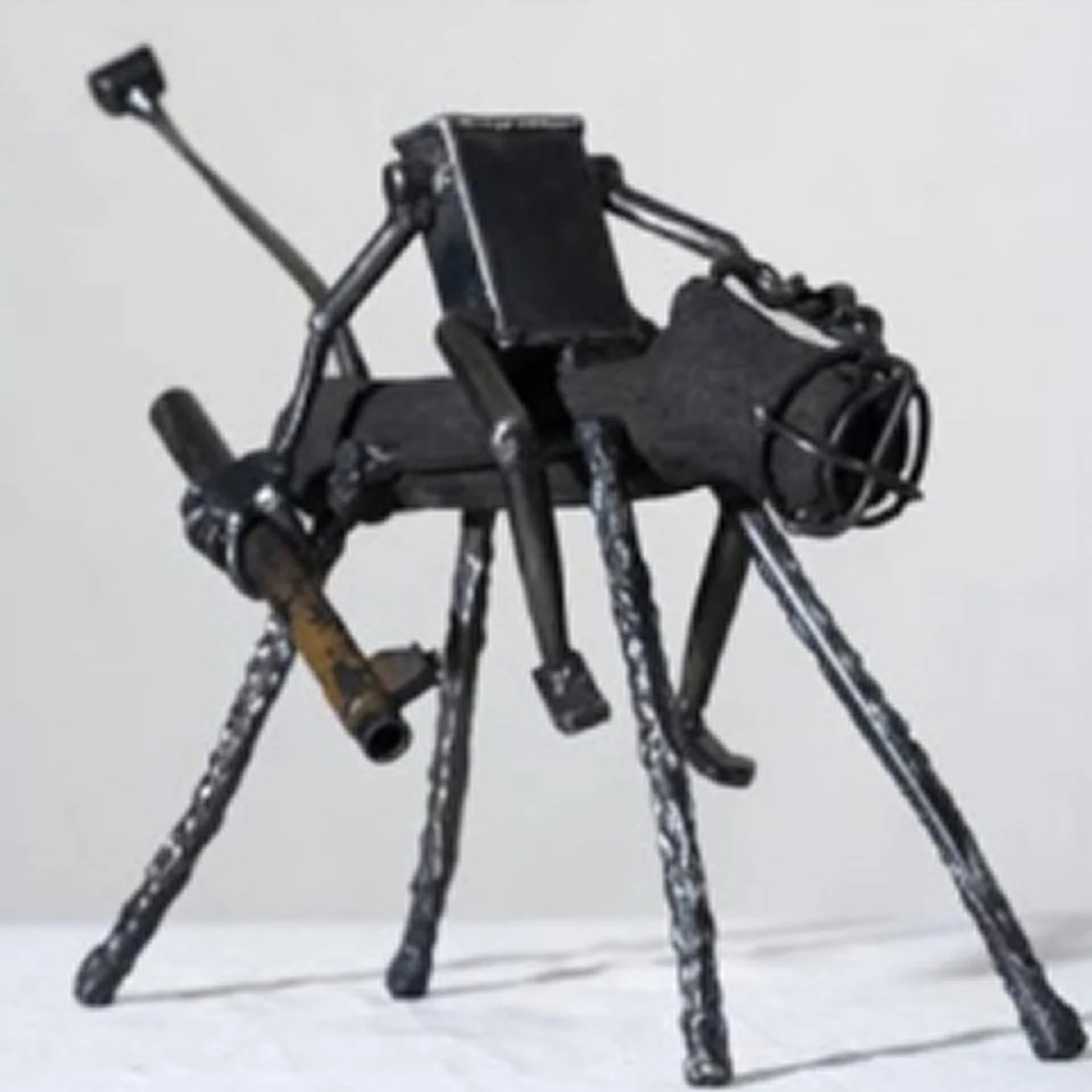
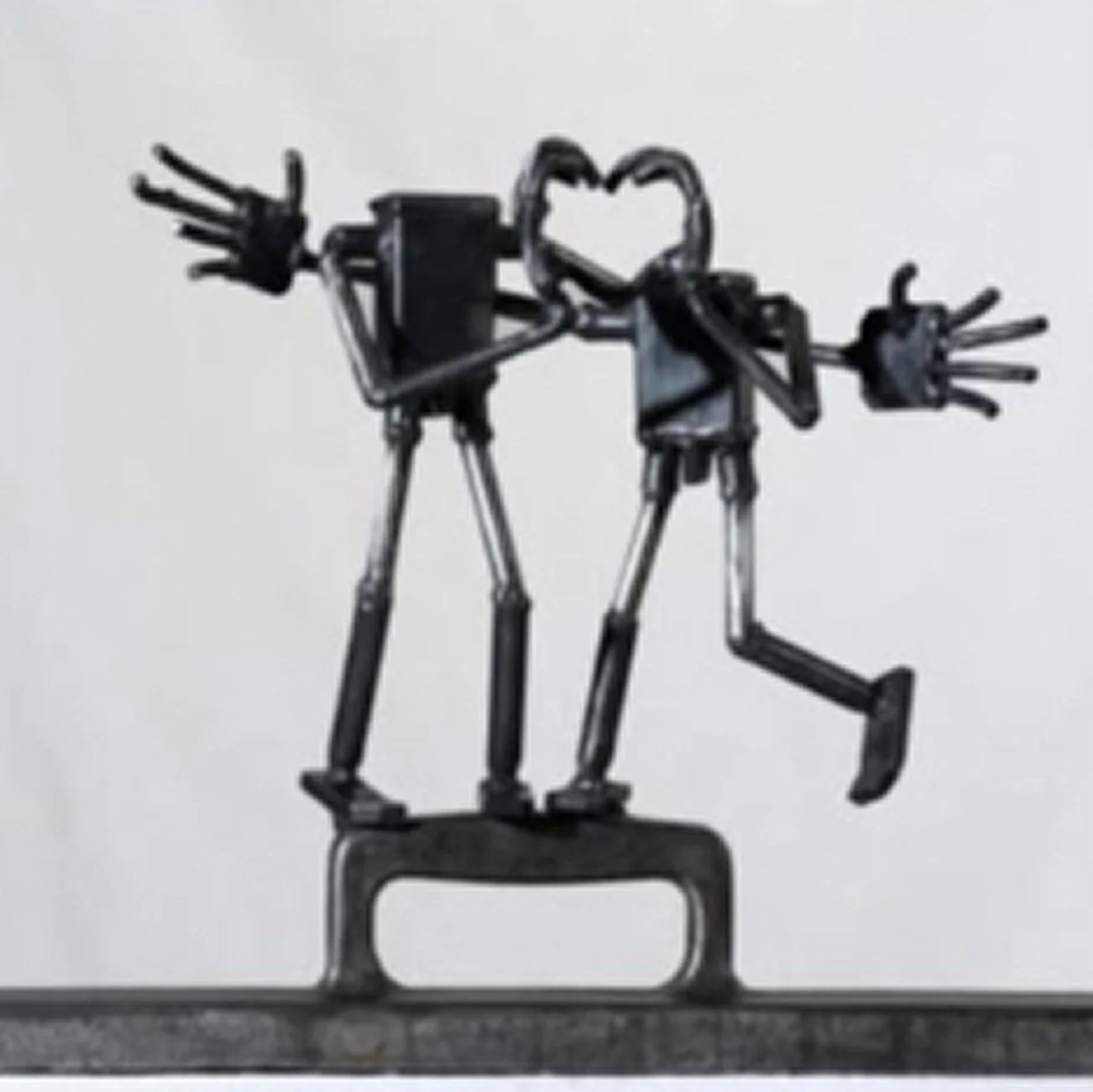
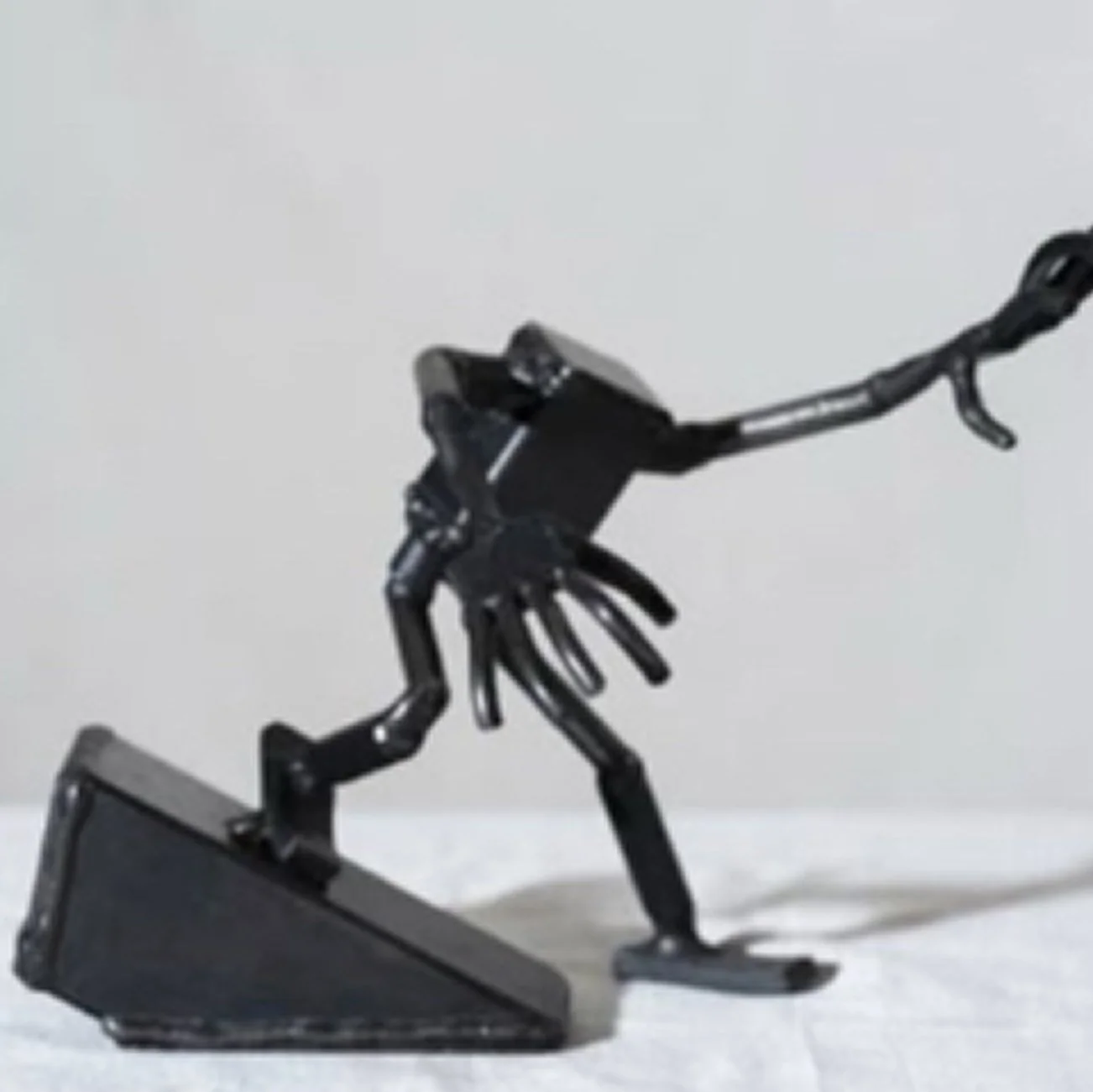
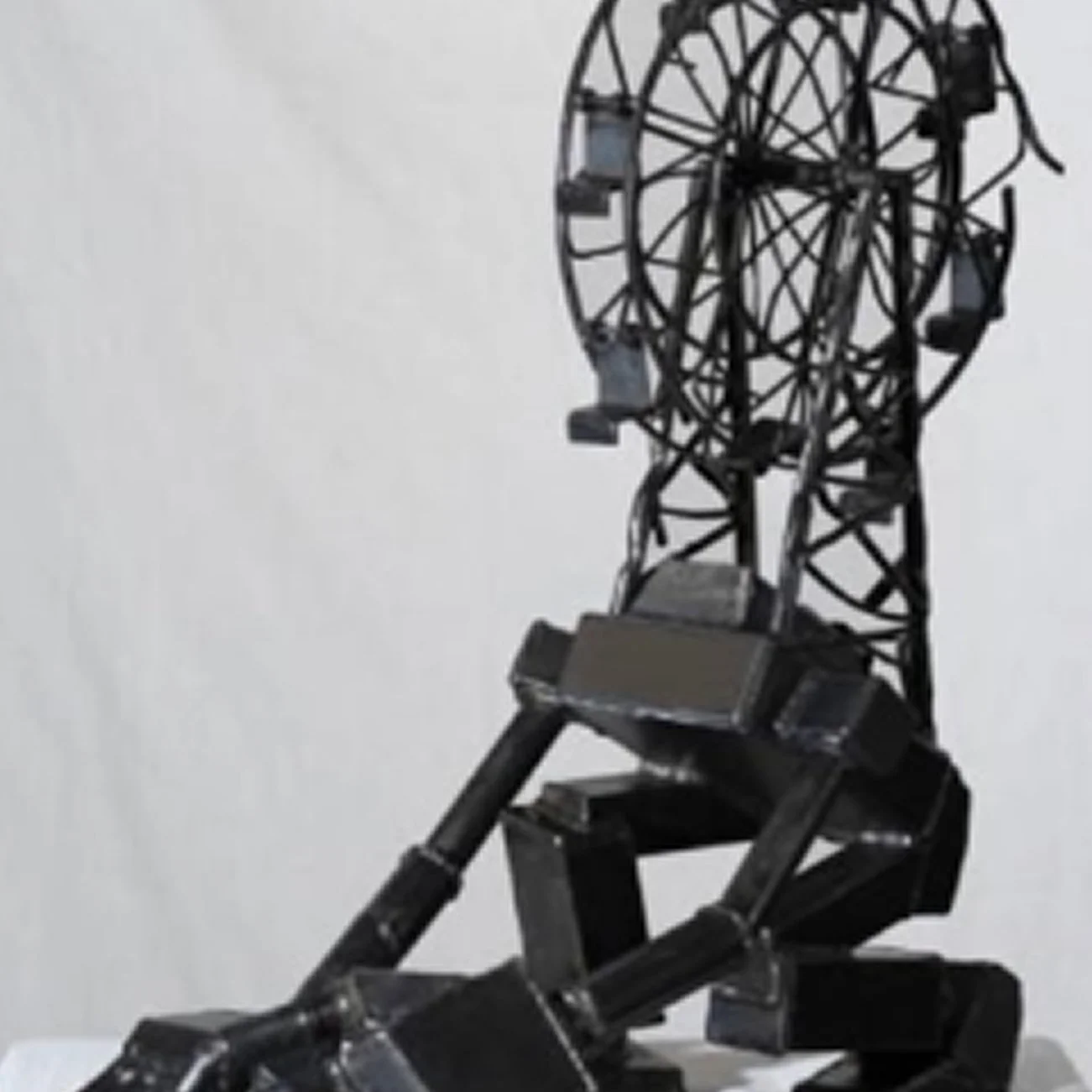
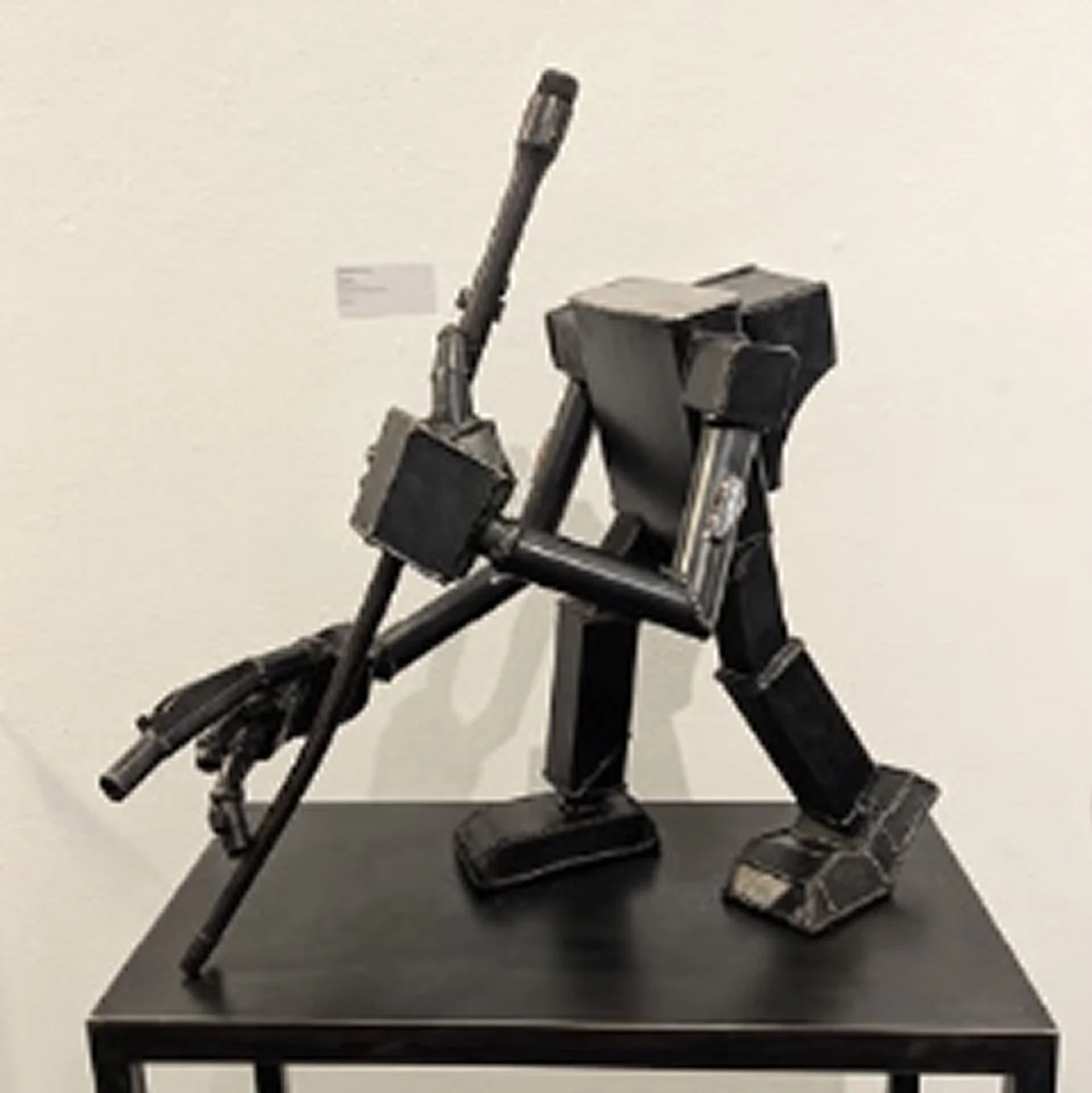
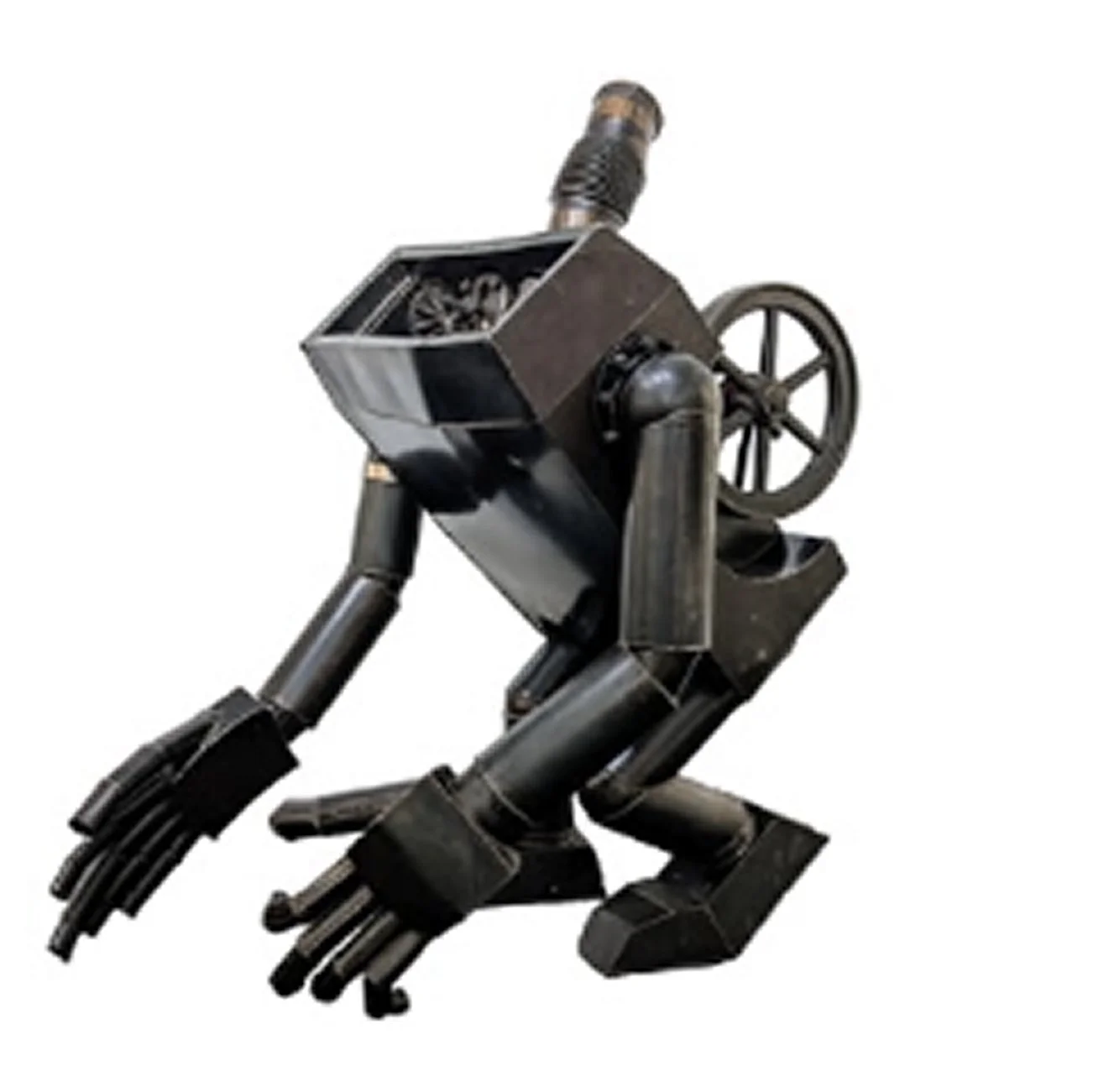
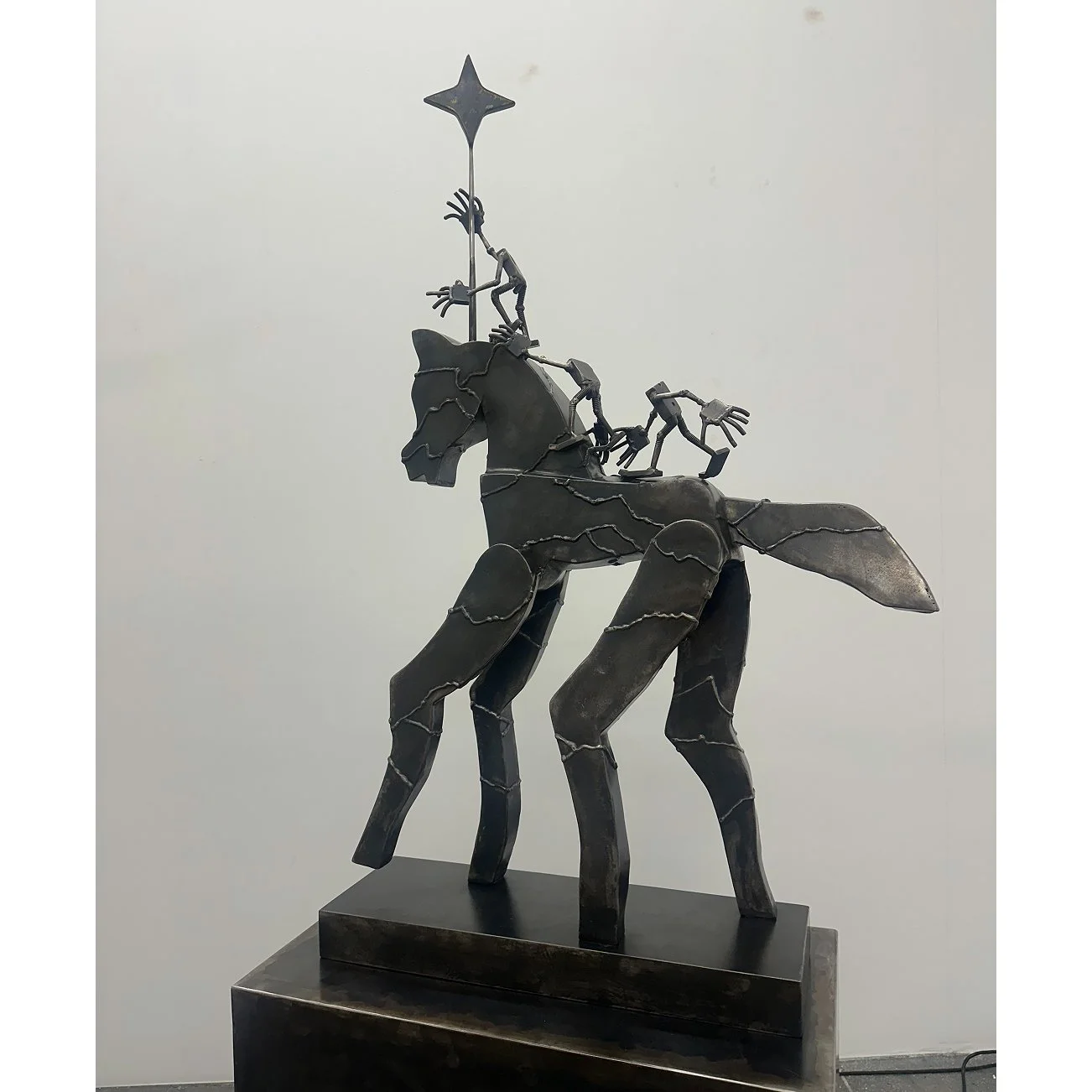
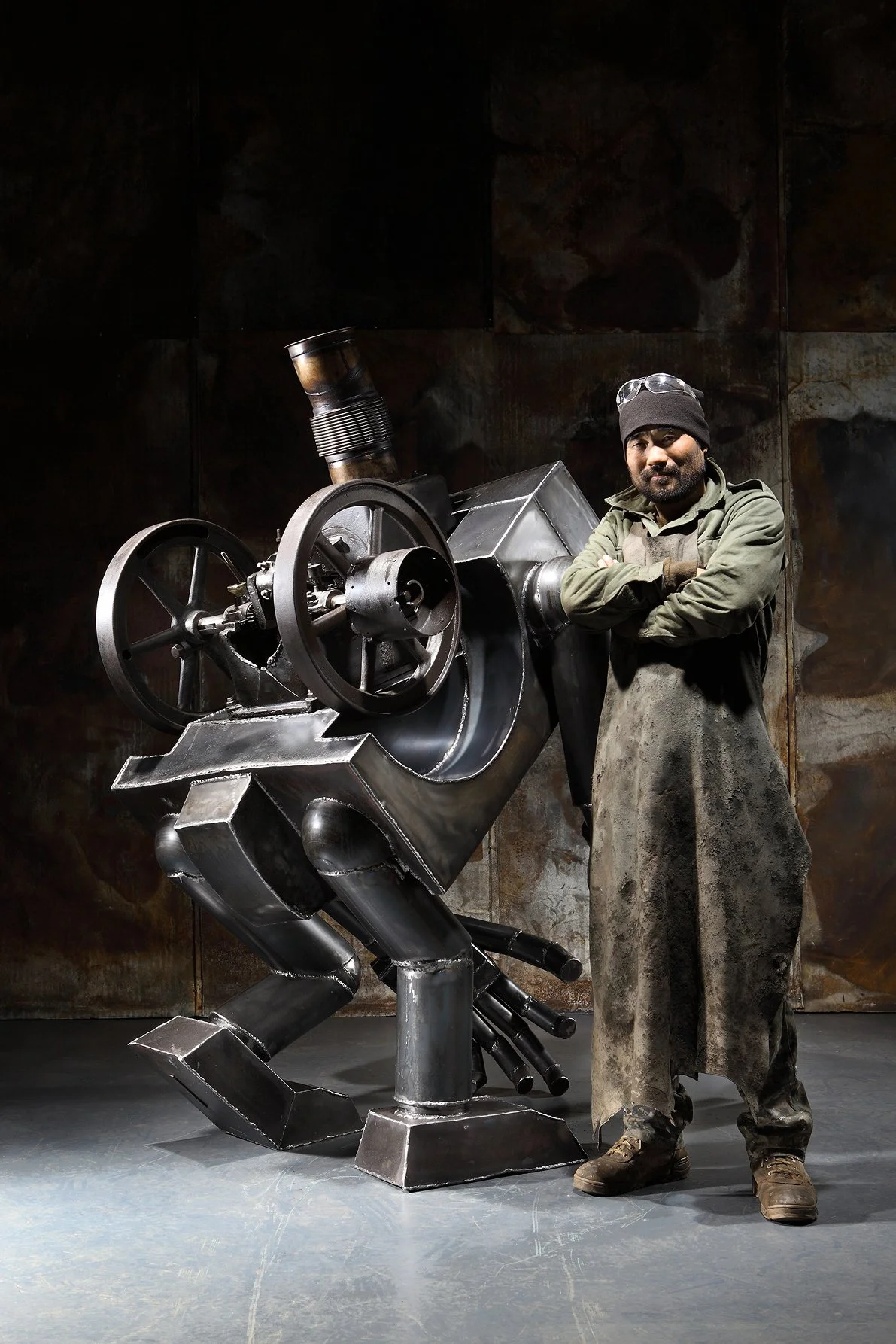
Over the past three decades, the Korean-born, New York-based artist Steel Che (formerly known as Youngkwan Choi) has explored a theme that grows steadily more provocative each year: the integration of human beings and machines. In keeping with his professional name—an allusion perhaps to Che Guevara—he assembles his anthropomorphic (though headless) steel sculptures from industrial parts in a huge studio near Seoul, adjacent to his family’s steel business. A BFA graduate of the Cheongju National University of Education, Che does much of the wrangling, welding, polishing, and other physical labor himself. This physical engagement echoes, perhaps even generates, his key artistic trope. He seems to have understood, kinesthetically, from childhood, the intimacy we all have with tools and equipment—an intimacy that, along with language, defines us as a species.
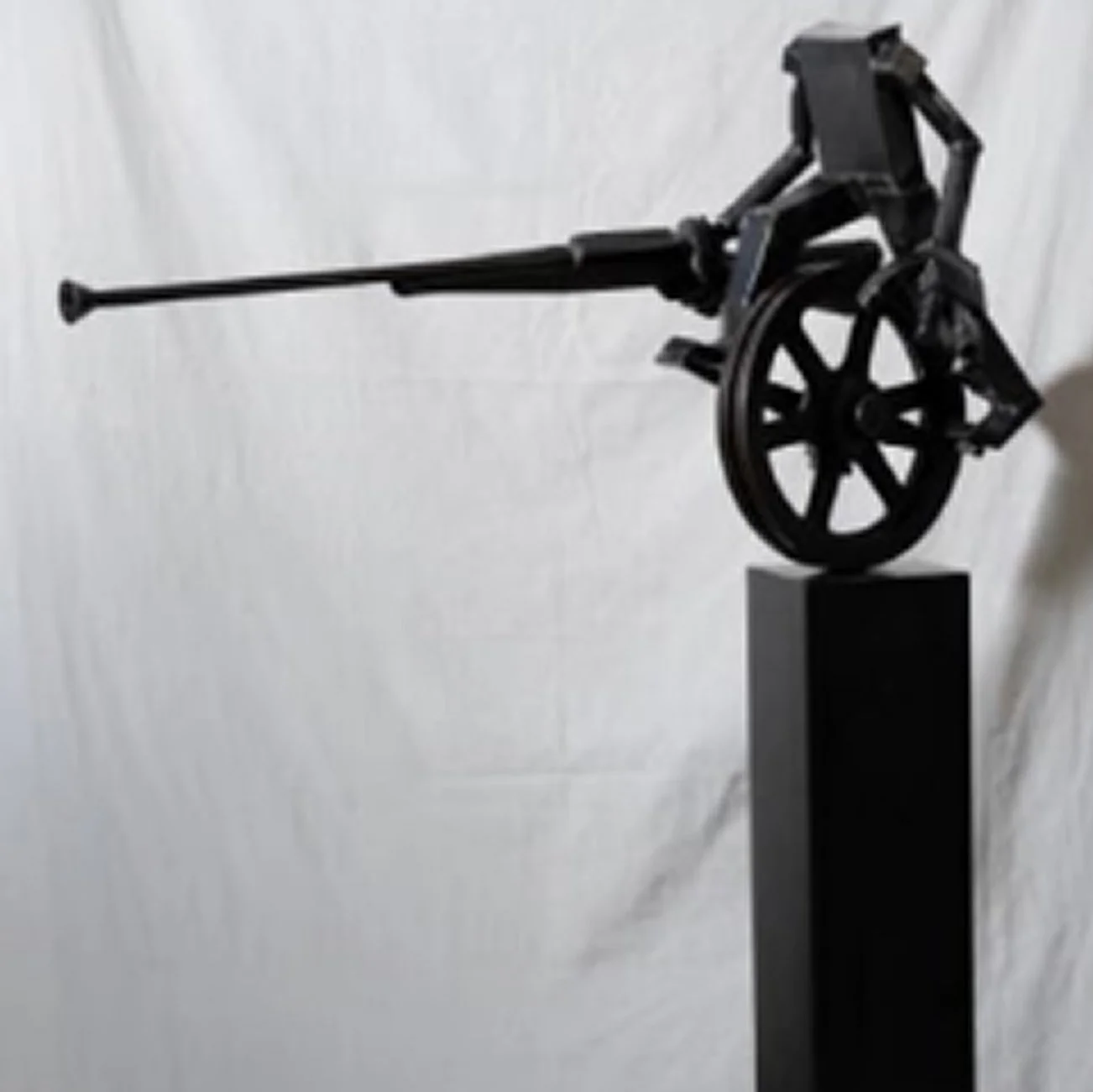
For example, Steam Boy (2018-2024), despite its nonhuman components—sensors, a steam engine, LED lights—has many convincing attributes of a hard-working male youth: broad shoulders, big feet, long arms, huge hands, a heavy-lifting stance. Gunman (2024), composed largely of gun barrels, recalls the western gunslinger ethos. The “man” here, not wholly human, is one with his function; he is a killing machine. The absence of a head bespeaks the absence of compassionate thought, a lack of conscience. The merger of man and machine may produce marvels, the artist reminds us, but it carries a proportionate danger.
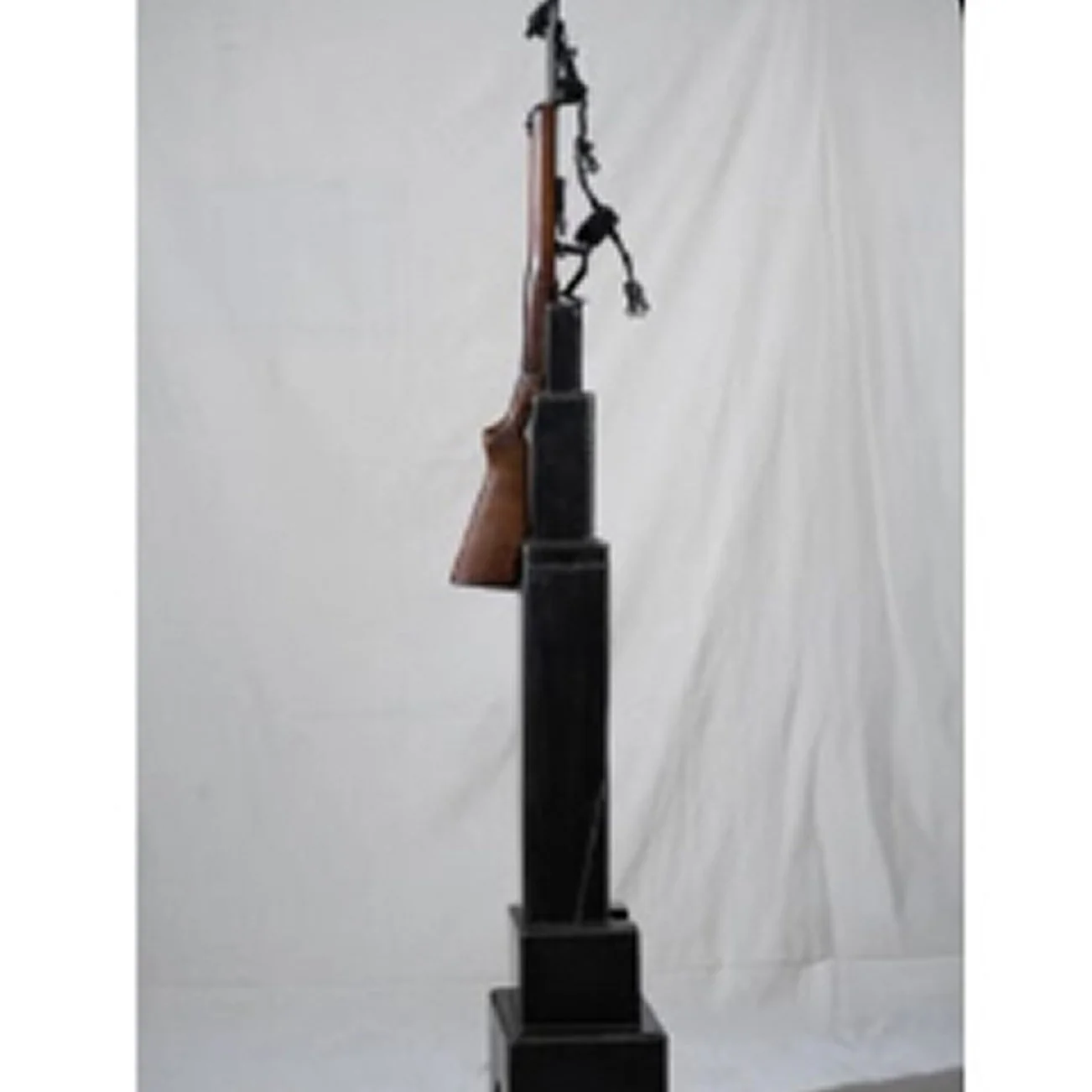
At the root of Che’s work lies the recognition that every tool—from the simplest lever to the most intricately crafted spaceship—serves to increase human reach and power. The result has equal potential for good and ill, reflecting the nature of the toolmaker, of all of us, individually and collectively. Che extends that insight even to architecture, which is, as Le Corbusier said of the family house, “a machine for living.” Thus in Moving Empire (2023) a mechanical man bears the Empire State Building on his back, reversing the usual phallic symbolism of skyscrapers and offering implicit commentary on the massive responsibilities of traditional masculinity. (Remember when every “real man” was expected to defend the nation, undergo physical pain and emotional trauma unflinchingly, and work tirelessly to provide a home and financial security for wife and children?) The compound figure likewise evokes the burden of empire, the irony that the strongest and most aggressive nations end up saddled with the consequences of their colonial exploitation, as testified most recently by the massive global immigration crisis. Thus Empire of Guns (2023) features an Empire State Building with a crowning antenna bent like a drooping penis, scaled by two boxy interlopers who have apparently taken a cue from King Kong or Spiderman—aliens blithely coopting the prime symbol of arrogance for their own purposes.
This duality has been recognized in mythology from the earliest times. Trapped in a labyrinth, Daedalus constructed artificial wings for himself and his son, only to witness Icarus fly too close to the sun, melt his wings’ adhesive wax, and fall into the sea. Human hubris exceeds human ingenuity. Machines, like artworks, are our own creations, our way of playing God—a game that often fails or goes disastrously awry.
Tales of humanoid mechanism supplanting their “masters” are myriad. Czech writer Karel Čapek’s 1920 play R.U.R. (Rossum's Universal Robots), which introduced the term “robot,” portrays organic-looking automatons—what we today would call “androids”—revolting against their oppressive lot as factory slaves and systematically destroying the entire human race. In Modern Times (1936), Charlie Chaplin plays a beleaguered assemble-line worker who, at one point, is pulled into the gears of a huge machine, his passage through the mechanism a visual metaphor for the way industrialism subsumes the lives of its servant-workers. Science fiction writer Isaac Asimov specified Three Laws of Robotics in his 1942 short story “Runaround”: that a robot must never harm a human being or allow one to be harmed; that it must always follow human orders (unless they entail human harm); and that a robot must protect itself, so long as doing so does not conflict with the first two rules. Like many of Asimov’s own works, a vast sci-fi literature (in both texts and films) examines the dilemmas inherent in these stipulations. What if the human being that a robot must not harm is himself a homicidal maniac? What if following human orders threatens to destroy other species or their vital habitats? Pulp author Philip K. Dick’s 1968 novel Do Androids Dream of Electric Sheep? (source for the 1982 movie Blade Runner) follows a bounty hunter who roams a post-nuclear-apocalypse California city in search of renegade androids that he “retires” by shooting them one by one.
Little wonder that so many of Che’s headless (and therefore brainless and mindless) creations involve guns, which can so efficiently deliver death—the thing that humans dread most and that machines, no matter how ruinously damaged, can never experience. Or can they? The advent of artificial intelligence has raised a metaphysical puzzle. If seeming to think becomes indistinguishable from actually thinking, is it real thought? And given that the conceptual structures and biases of human designers, coders, and programmers innately pervade digital hardware and software alike, will AI’s simulated cogitation be any less hazardous than our own? In the 1968 Stanley Kubrick film 2002: A Space Odyssey (based earlier stories by Arthur C. Clarke), HAL the computer kills several members of a space crew in order to cover up its own error. The Terminator, in the 1984 James Cameron film of the same name, is a cyborg (a being combining artificial and biological elements) sent back in time to kill humans who would interfere with the machinations of Skynet, an anti-human AI. Elsewhere, cyborgs are sometimes menacing (Darth Vader in Star Wars movies) and sometimes menacing but righteous (RoboCop in the eponymous films). In another variation, Transformers, in that recent film franchise, are shape-shifting robots with actual emotions, thoughts, and personalities.
Clearly, we are not sure which is worse: a machine that cannot think and feel, or one that seemingly can. That complexity puts Che, with his steampunk sensibility and wry humor, in a rich postwar artistic history. In the 1960s, Jean Tinguely made self-destroying kinetic sculptures, and Edward Ihnatowicz fabricated interactive art robots. By the early 1980s, Sterlac was doing performances using robotic exoskeletons and cybernetic body enhancements. Nam June Paik spawned his “Family of Robots,” combining TV sets and cabinetry, in the mid 1980s. In the late 1990s, Leonel Moura moved from photo-work to AI, creating a machine that makes paintings and a robot zoo.
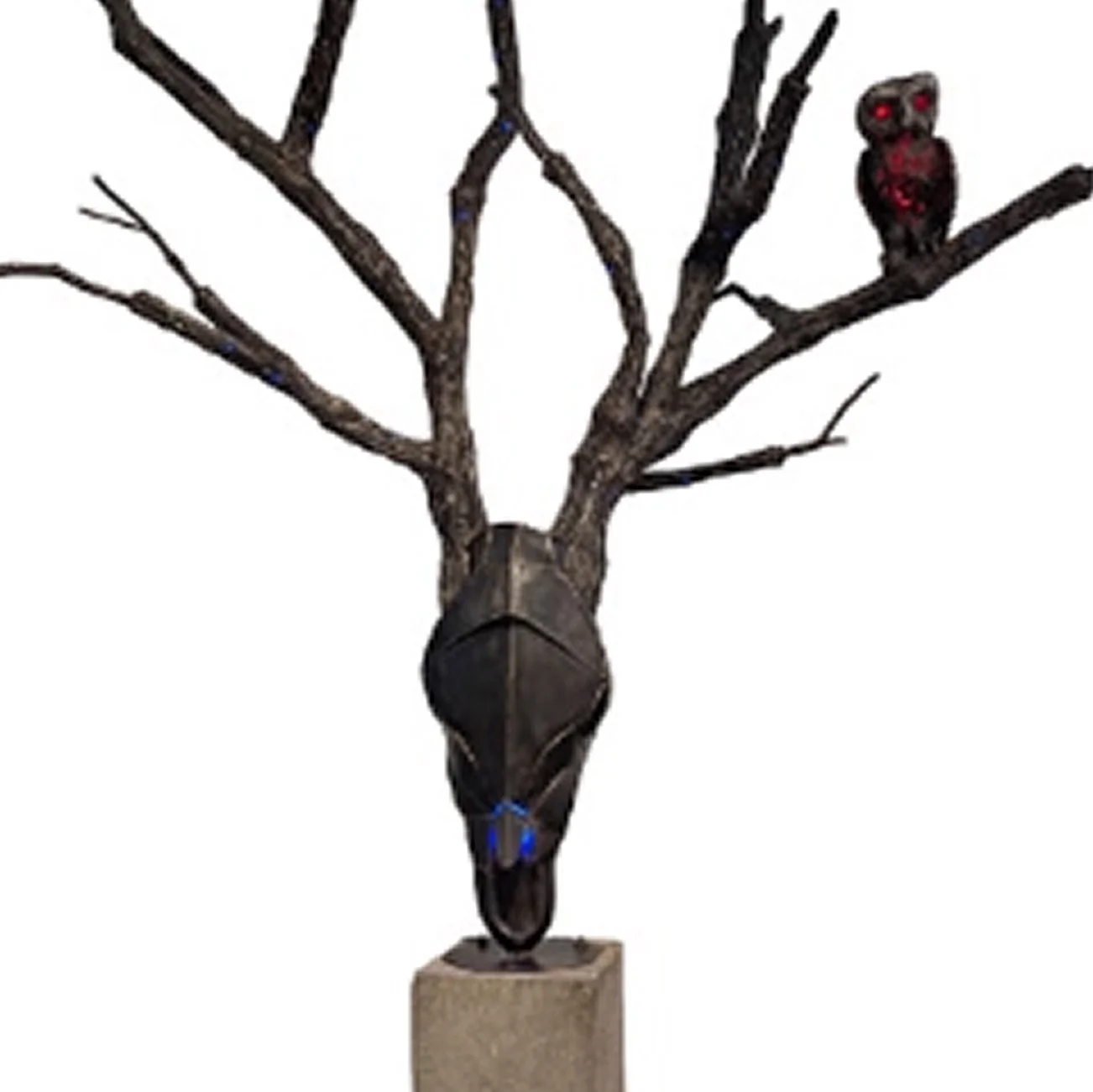
The myth of Pygmalion, the sculptor whose statue of a beautiful woman came to life, dates to ancient Greece. But Che’s Forest Spirit (2024) suggests that the issues it plumbs are older than machinery itself. Stark branches or perhaps antlers grow out of a primitive mask. An owl, a traditional symbol of wisdom, sits with devilishly red eyes aglow on one of the protrusions. The effect is primal and timeless. We recall that, according to Hegel, the Owl of Minerva (i.e., the wisdom of philosophy) flies too late, when the world has already moved on, or nearly ended.
By Richard Vine
* Richard Vine is the former managing editor of Art in America and author of such books as New China, New Art and Odd Nerdrum: Paintings, Sketches, and Drawings, as well as the artworld crime novel SoHo Sins.