Jo Mihyang: Moment of Tree
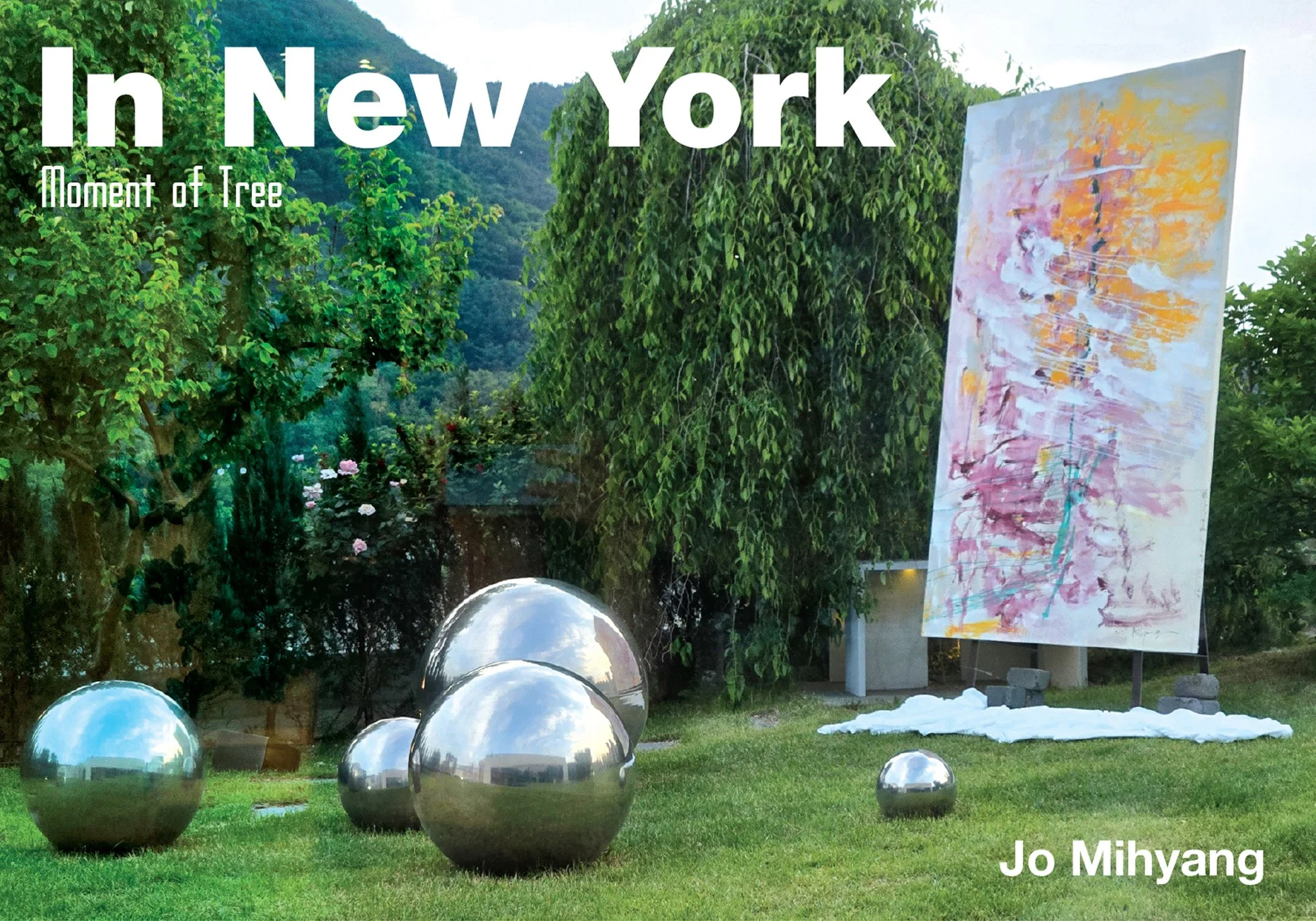
Exhibition: Oct 28th - Nov 18th, 2025
Opening Reception: October 29th (3:00-6:00pm)
Radical Spontaneity: The Poetic Paintings of Mihyang Jo
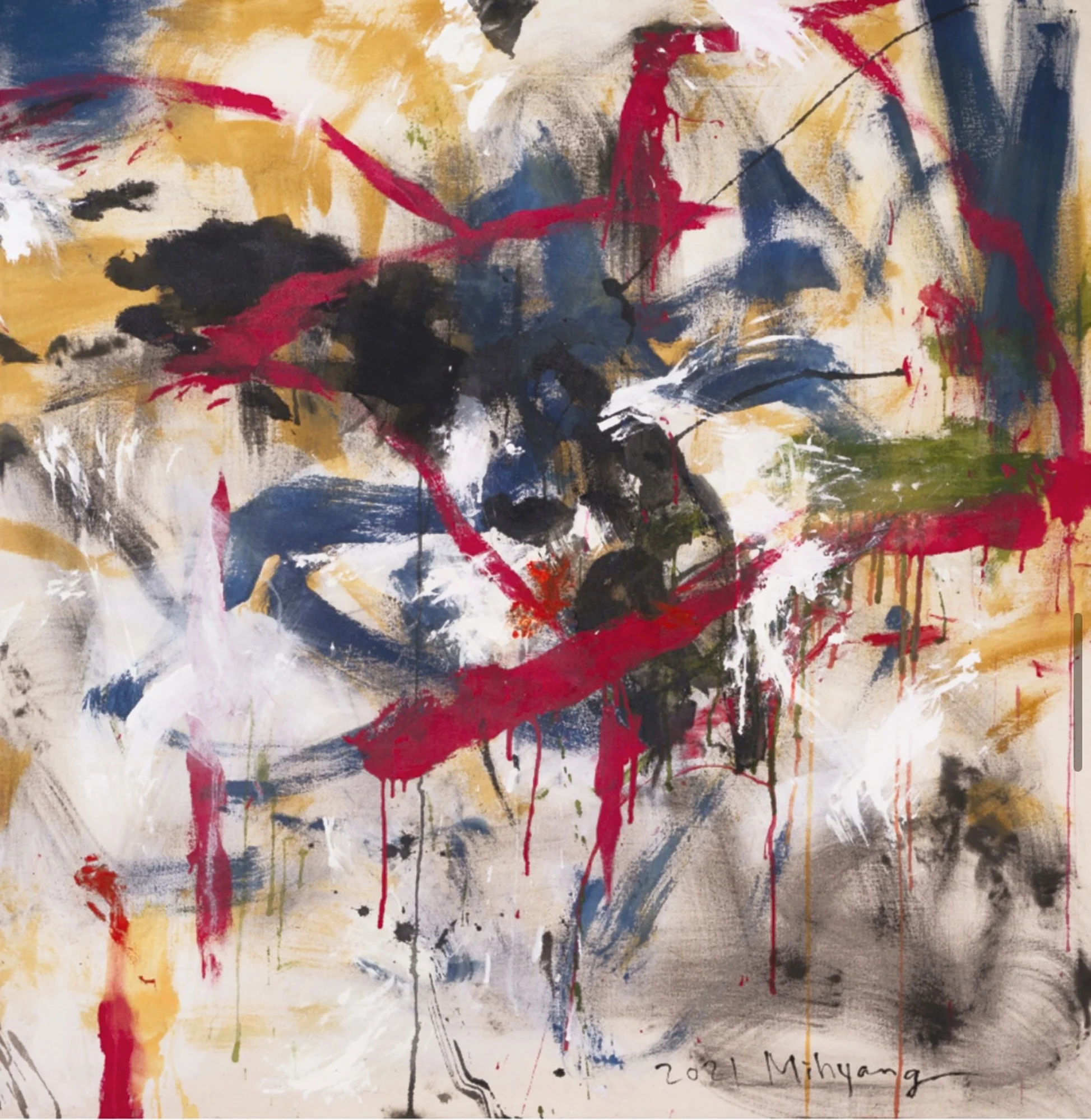
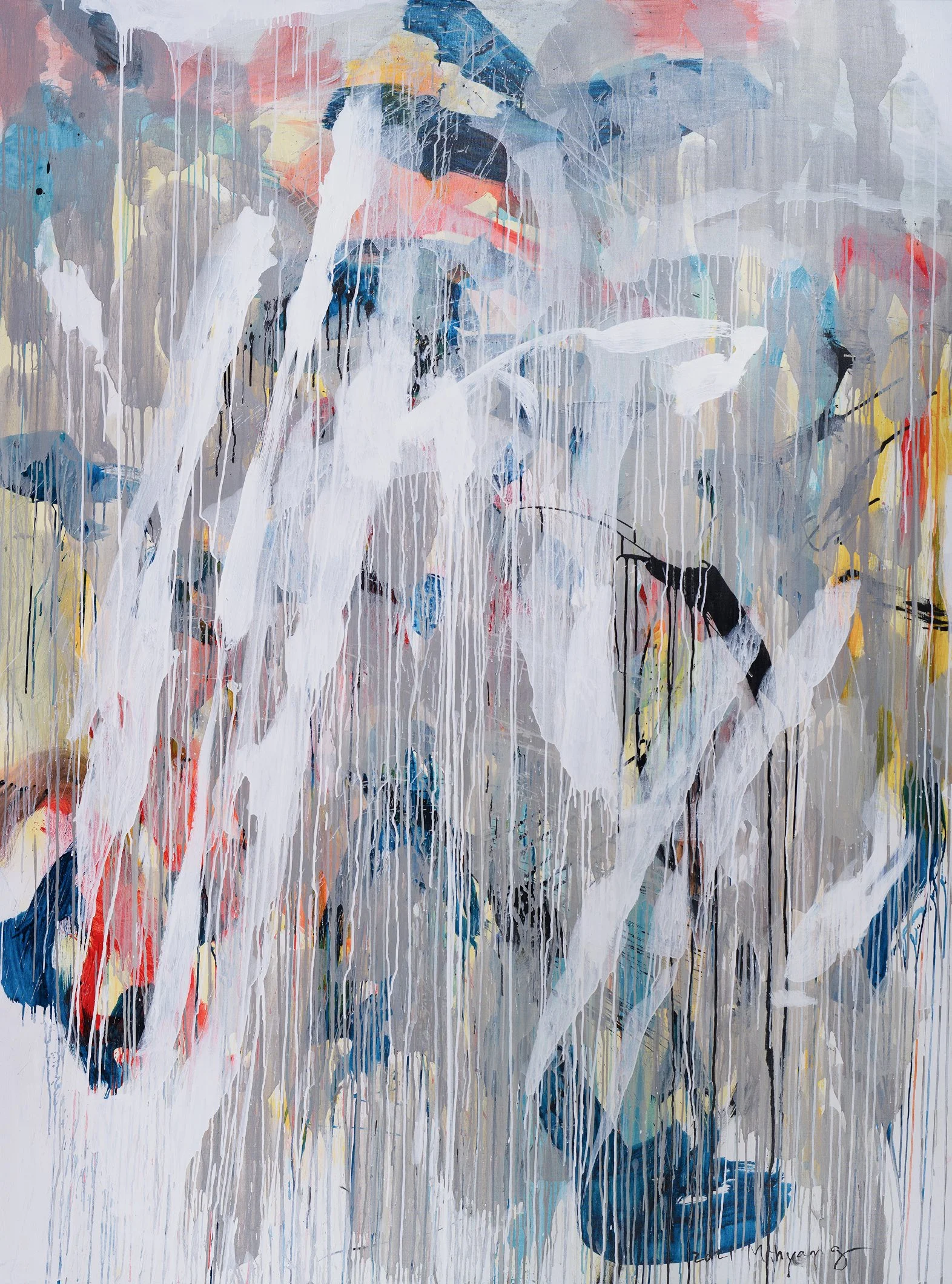
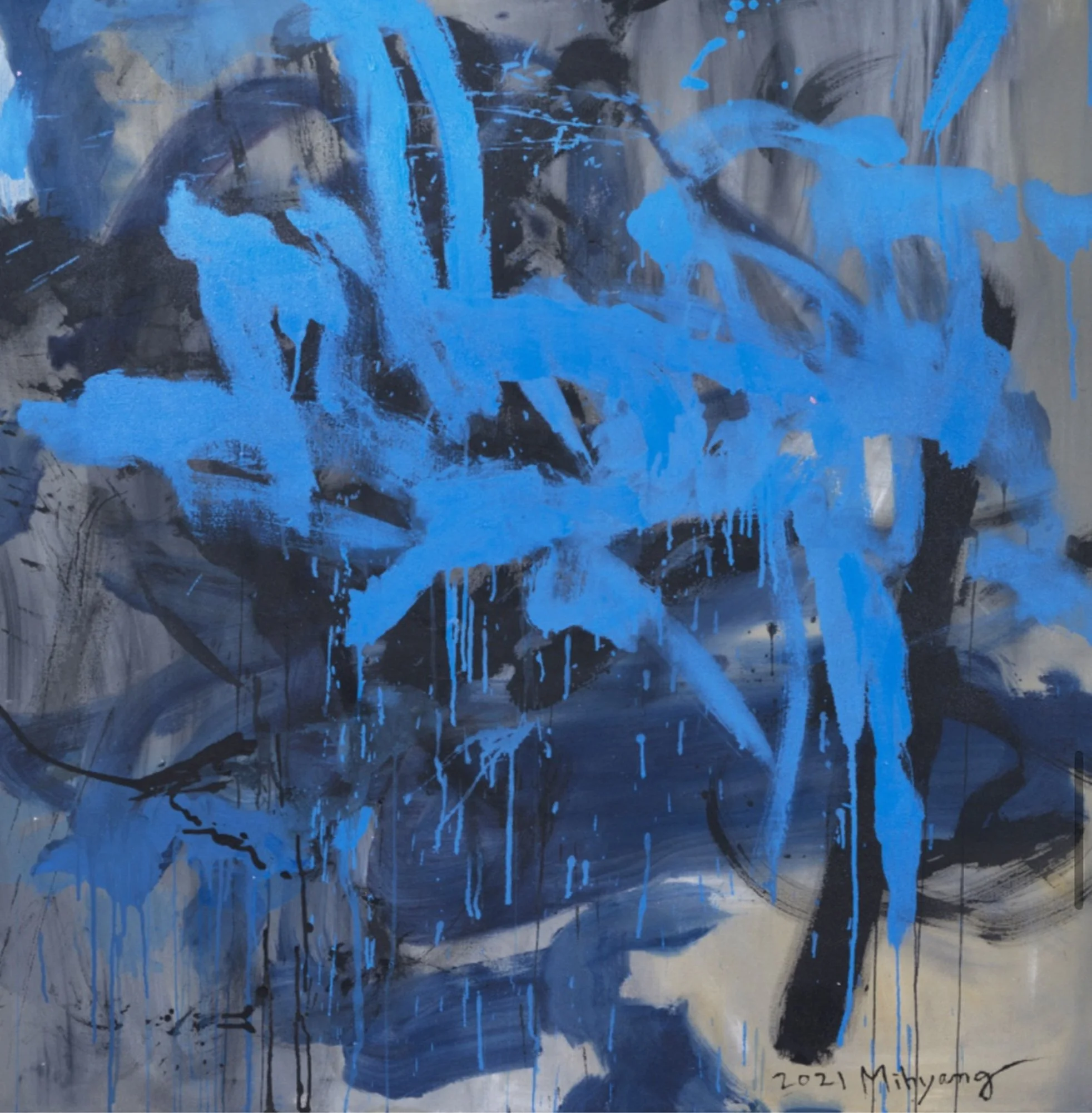
Korean artist Mihyang Jo’s acrylic-on-canvas paintings take one of the defining aspects of artistic modernism—gestural abstraction—to its aesthetic culmination. “It feels as though I am not painting the picture,” she writes in Signaling Within Ignorance; “rather, the painting speaks its own language through my actions.”
The author of an ongoing column on art, Jo undoubtedly knows that this practice, though familiar to viewers today, is an historical anomaly. No matter where one looks around the globe, the art of the past was primarily a matter of premeditation, communal values, shared visual codes, and analysis of the world beyond personal experience. Tribal art, seeking to placate teeming spirits, directly reflected tribal cosmology. The statues and wall paintings of Egypt commemorated social hierarchy both terrestrial and divine, the art of Greece and Rome was mathematically precise in its grace and rigorously clear in its social import, Gothic work induced religious longing and prescribed the procedures for eternal salvation, Renaissance artistry humanized history and myth, and post-Renaissance styles—especially the Baroque—exalted dynamism for the common good, in forms comprehensible to all.
How different that heritage is from the freewheeling anti-formalism, the sheer physical exuberance, of Jo’s layered, multicolored daubs and slashes of paint. As the artist avows in Abandoning the Map: “I choose to remove learned meanings from the canvas and to experience things directly in the present moment.” For her, making art is a one-person declaration of independence.
Before the turn of the 20th century, only in Asia was there a type of painting that accommodated, as an explicit principle, a significant degree of individual spontaneity. In the 8th century, Wang Wei, a Chinese poet, musician, painter, and politician launched a new mode of artistic being. He and other scholarly “literati” ink painters and calligraphers, distinguishing themselves from professional court painters, consciously prioritized personal responses to nature, cultural tradition, and their own inner life.
Although their works, to contemporary eyes, may appear stylized and repetitive—focused obsessively on mountains and water, plants and flowers, birds, and a narrow range of nonthreatening animals—their idea of liberated formal expression was enthusiastically taken up in the mid-20th century by artists around the world.
The most daring of these converts were the artists who opted for intuitive gesturalism, known variously as “action painting,” Tachism, or Abstract Expressionism. Mihyang Jo, decades later, continues that international legacy in every phase of her process. Echoing the spiritualism of early abstractionists like Hilma af Klint, Kazimir Malevich, and Wassily Kandinsky, she embraces “the boundless expanse of space and time—and the thread of connection—between myself and the universe.”
Alone, Jo awaits inspiration from the beyond, its generative energy personified as “he,” whose arrival cannot be forced or rushed. Once the creative impulse strikes, once it fills her, she surrenders her will and acts purely as its conduit. “My work unfolds like the
journey of a traveler who has thrown away the map,” she says in Abandoning the Map. The artist, disoriented but enlivened, becomes a medium of cosmic energy in two senses. Not only does the life-force pass through her as through a soothsayer, but she also becomes—transitionally, as she wields her brushes—an enchanted embodiment of the very art she is birthing. She then refuses to be confined by reason or language: “I am deeply skeptical of the logic of the world. A world confined by words suffocates me.” Her works are visual poeticisms in which she strives for “uselessness”—aesthetic elevation as a supreme goal in and of itself.
Rationalists might raise numerous objections: that the forces Jo channels are not external but psychic, that the association of speedy untethered brushstrokes with freedom is a cultural convention, that “spontaneous” gestures and forms actually result from years of assimilating earlier art, that the pleasing colors and compositional harmonies of the artist’s canvases reveal more about her innate happiness than about the human condition. But such caveats Jo utterly dismisses.
She is genuinely overwhelmed and convinced by her own repeated catharses, and by the persuasive beauty of the paintings they yield: “Sometimes, as I gaze upon my canvas, I think, ‘This truly is an independent world.’”
That is as it should be. In the end, viewers encounter not the artist’s methodology or belief system but the physical reality of her finished works. Their effects, which defy all programming and wishful thinking, are as unpredictable, and as sacrosanct, as the origins of creativity or the mysteries of love—two topics at the core of Jo’s oeuvre.
By Richard Vine
* Richard Vine is the former managing editor of Art in America and author of such books as New China, New Art and Odd Nerdrum: Paintings, Sketches, and Drawings, as well as the artworld crime novel SoHo Sins